
How to Choose Ergonomic Mat for Commercial Kitchen | EVA GLORY
Reviewed By: Product Team
Table of Contents
Key Takeaways
Zone before product
Cooking line, dish pit, prep and cold storage each need a different mat specification.
Texture sets grip
Surface pattern, tested with real footwear, matters more than a “non-slip” label.
Bevel the edges
Sloped edges and tight joins keep carts and feet from catching.
Drainage by wetness
Solid where floors stay greasy or dry, drilled where water pools.
Match the Mat to the Kitchen Zone
Each kitchen zone stresses a mat differently, so one specification rarely fits the whole back of house.
A walk through the floor plan shows where staff stand longest and where the floor stays wettest.
Cooking line and fryer stations
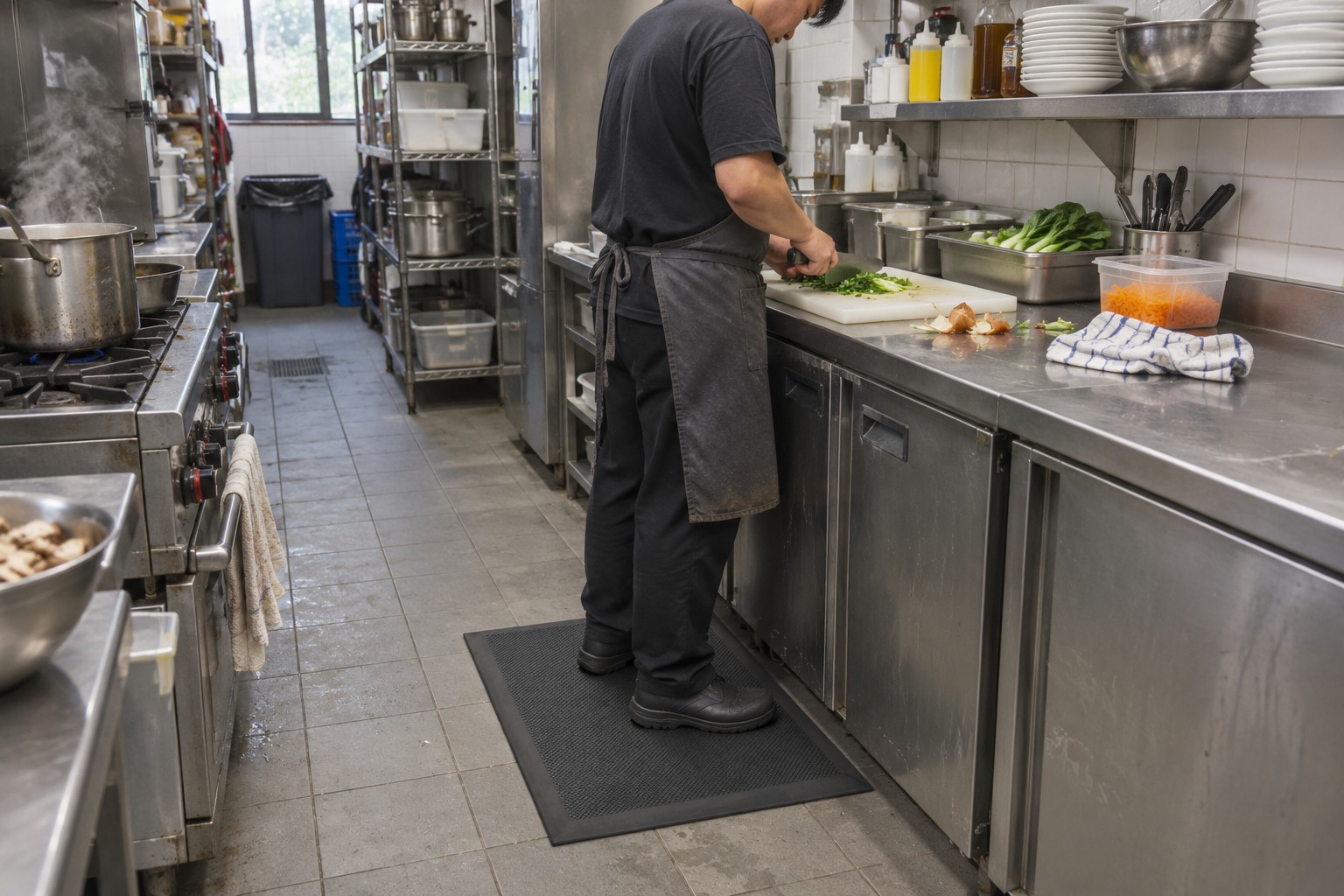
Cooks stand in one spot for hours while oil reaches the floor within seconds, so an anti-fatigue mat for fryer and cooking line work needs an oil-resistant compound and a textured surface that grips under greasy soles. Heat tolerance matters near fryers and ranges. Follow your fire safety rules for clearances around open flame.
Dish pit and wet areas
A commercial kitchen anti-fatigue mat for dish pit use must handle standing water and soap film. Surface texture and a drainage option carry more weight here than in any other zone. Mats that lift out in sections let crews rinse the floor underneath.
Prep stations, walk-in cooler and dry storage
Prep stations are the easiest zone to protect, since floors stay mostly dry and staff stand still for long stretches. A firm, comfortable mat does the job, with drainage as a minor concern.
For an anti-fatigue mat for walk-in cooler and prep station areas, cold is the added variable. Mats should stay flexible at low temperatures instead of stiffening underfoot.
| Zone | Typical floor condition | Priority features |
|---|---|---|
| Cooking line / fryer | Greasy, warm | Oil resistance, textured surface, beveled edges |
| Dish pit | Wet, soapy | Drainage option, deep texture, lift-out sections |
| Prep station | Mostly dry | Cushioning, comfort over long shifts |
| Walk-in cooler | Cold, occasionally wet | Cold flexibility, textured surface |
Table: Mat priorities by kitchen zone, based on typical floor conditions.
Slip Resistance: Choosing a Non-Slip Kitchen Mat for Greasy Floors
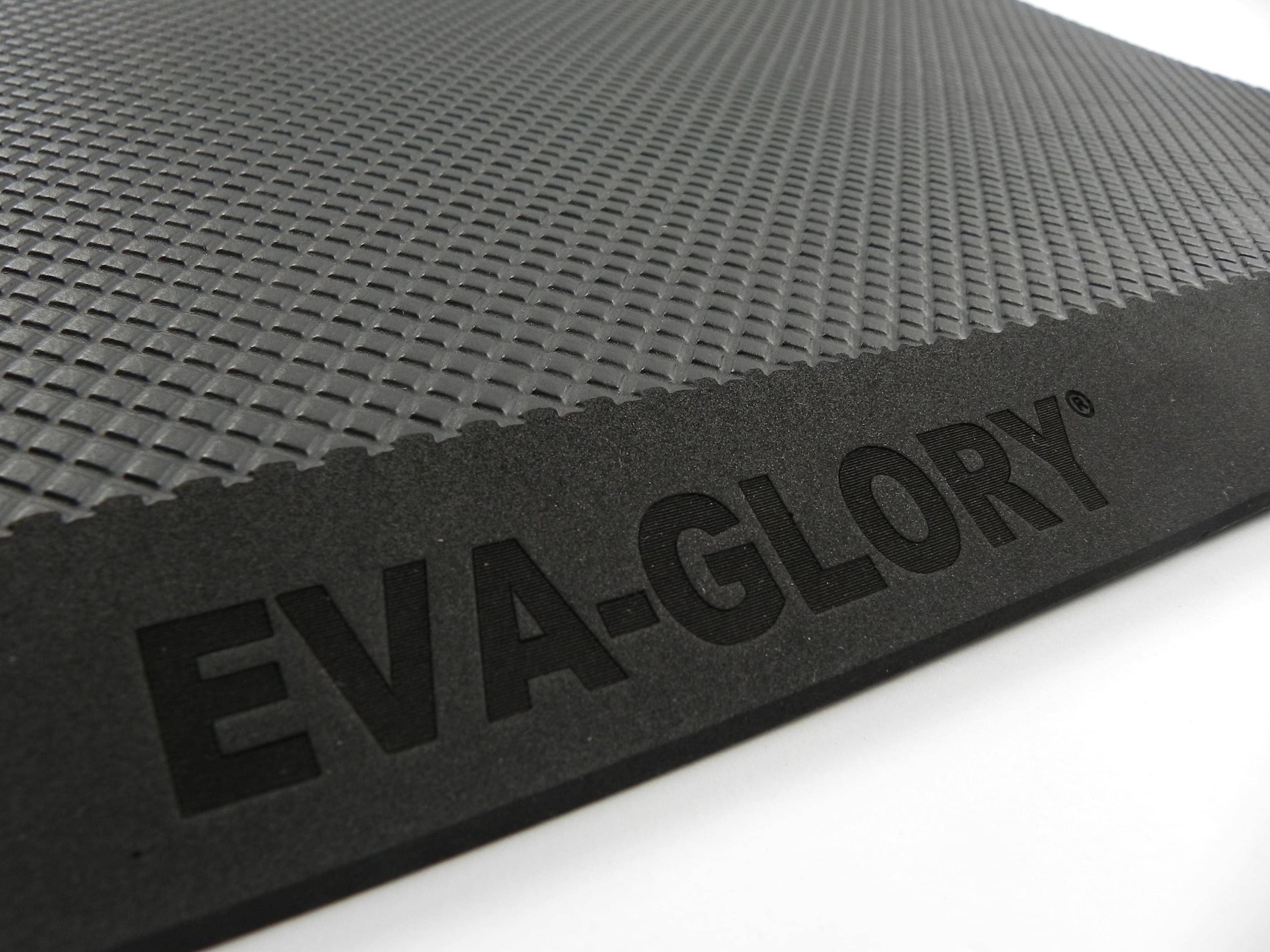
Surface texture does most of the slip-resistance work on a greasy floor. A raised pattern channels liquid away from the sole contact points, which is what a non-slip kitchen mat for greasy floors needs to do.
Pattern depth and geometry vary widely between mats that carry the same “non-slip” label. Ask for a sample and walk on it with your crews’ actual work shoes, wet and greasy.
Texture is set at the mold stage, so it cannot be fixed after production.
Easy cleaning protects grip over time. A pattern that rinses clean keeps its traction longer than one that holds residue.
How anti-fatigue mats support workplace safety and ROI
Beveled Edge Anti-Fatigue Mats and Trip Safety
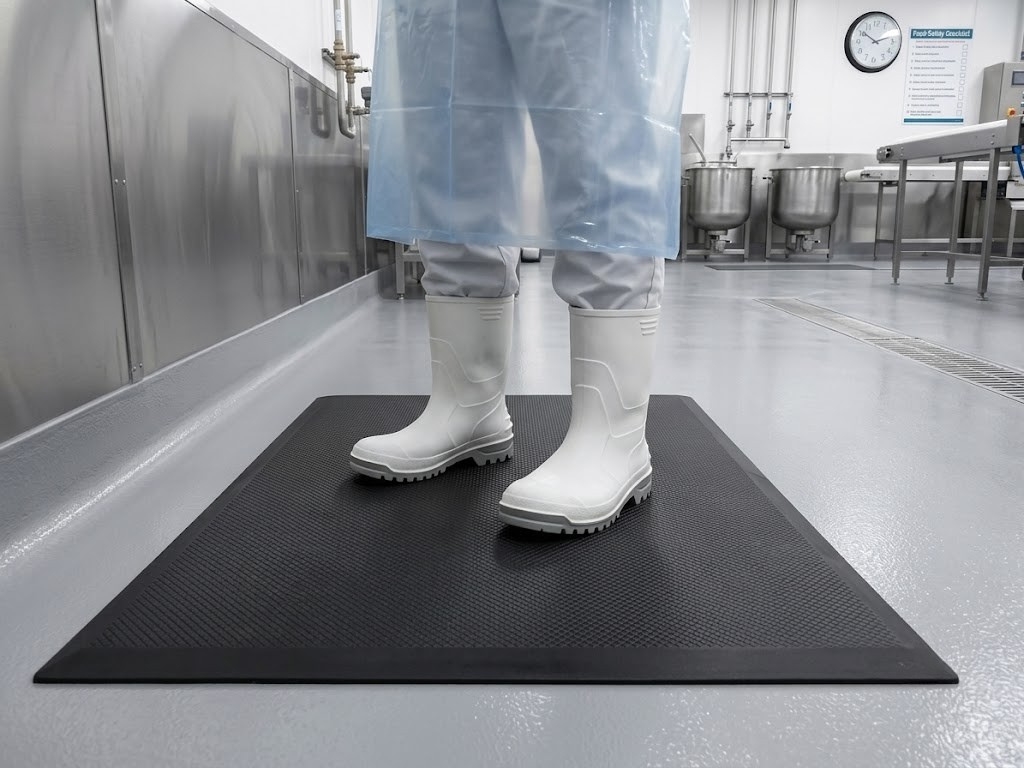
A beveled edge anti-fatigue mat lets feet, carts and dollies cross the mat boundary without catching. A cushioned mat creates a step by design, and a bevel turns that step into a slope.
Where mats meet, tight joins matter as much as the edge angle.
Placement finishes the job. Mats belong at fixed standing stations, with travel lanes left clear for carts and pallet jacks.
Drainage Holes vs Solid Anti-Fatigue Mats: Choosing by Floor Wetness
The choice between drainage holes vs solid anti-fatigue mat designs follows how much liquid reaches the floor in each zone. Where water pools, drilled holes let it pass through. Where floors are greasy or dry, a solid surface wipes down in one pass.
OSHA addresses this directly in 29 CFR 1910.22: where wet processes are used, drainage must be maintained, and dry standing places such as mats should be provided to the extent feasible.
Drilling can be added to a solid mat after production, so one base material can serve both wet and dry zones.
Thickness for long shifts
Thicker is not automatically better, and kitchen mat thickness for long shifts is a balance between cushioning and stability. A very soft mat can feel unsteady under a loaded tray, and added thickness raises the edge height that a bevel has to manage.
EVA GLORY manufactures its anti-fatigue mats in-house from an NBR+PVC composite foam, with a mold-engineered surface texture, beveled edges and custom sizing built into the same production process. Post-production drilling is available for wet zones, and OEM/ODM and private-label programs cover distributors and multi-site kitchen groups.
EVA GLORY commercial anti-fatigue floor mat manufacturing
Frequently Asked Questions
Can a commercial kitchen mat be made in a custom size?
Yes, a custom size commercial kitchen mat can be cut to match station footprints, door thresholds and equipment lines. Share your floor plan dimensions so the mats fit without gaps or overlap.
Should every kitchen zone use the same mat?
Usually not, since the cooking line, dish pit and cold storage face different conditions. A common approach is one base material with different surface and drilling options per zone, which also keeps the look consistent. Zone-specific choices reduce slip risk where it is highest.
Can drainage holes be added to a solid mat?
Yes, holes can be drilled after production to suit wet zones. This lets a kitchen keep solid mats on dry or greasy stations and drilled versions at the dish pit.
Where should anti-fatigue mats not be placed?
Mats should stay out of travel lanes where carts and pallet jacks move at speed. They work best at fixed standing stations, with beveled edges and tight joins wherever traffic does cross.
Want more ergonomic mat guidance for your commercial kitchen?
Contact Our Team
