
Shore A, Shore C, and Shore 00 Explained: Applications, Material Scope, and EVA & PE Foam Insights
What Is Shore Hardness and Why It Matters in Foam Materials
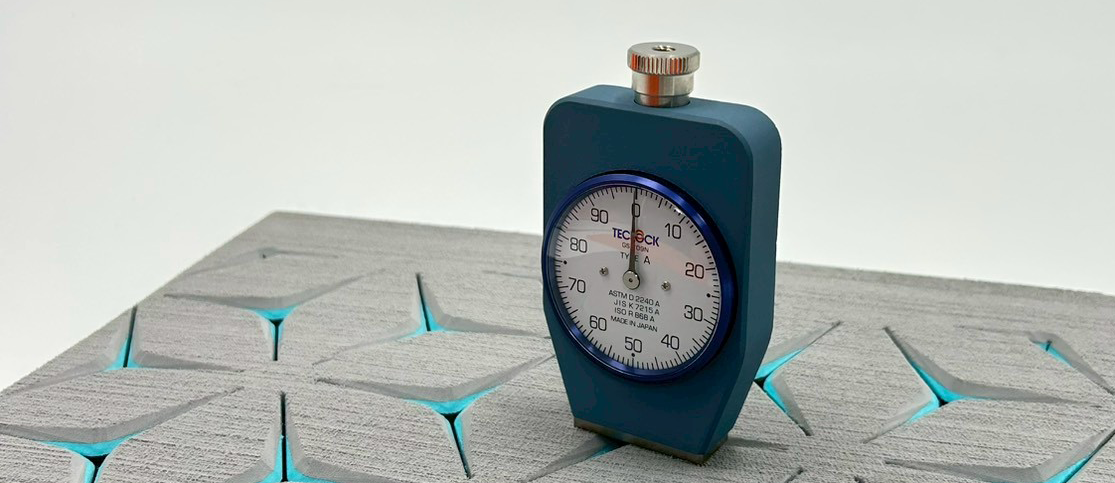
Shore hardness is a standardized method used to measure the resistance of elastic materials to indentation, as defined by ASTM D2240. It is widely applied to EVA foam, PE foam, rubber, and elastomers that deform under pressure and recover once the force is removed.
Rather than measuring overall strength, Shore hardness reflects surface response, making it critical for evaluating cushioning feel, compression behavior, and perceived firmness.
Difference Between Hardness and Density
Hardness and density are independent properties. Density measures mass per unit volume, while hardness reflects surface resistance. Two foams with identical densities may have very different Shore hardness values due to formulation and processing.
For ultra-soft EVA foam, Shore 00 provides resolution that Shore A cannot capture.
Understanding Shore A, Shore C, and Shore 00 Hardness Scales
Shore hardness scales are measurement tools rather than material classifications. Different scales exist because elastic materials range from ultra-soft to semi-rigid.
Shore A – The Most Common Hardness Scale
Shore A is the most widely used scale for flexible foams and elastomers, including EVA foam, PE foam, PU, TPU, and TPE. It is commonly referenced for footwear midsoles, sports protection, and general cushioning.
Shore C – Hardness Measurement for Firmer Materials
Shore C is used when materials are too firm for Shore A accuracy. Typical applications include high-hardness EVA foam, rigid PE foam, marine deck foam, and load-bearing components.
Shore 00 – Hardness Measurement for Ultra-Soft Materials
Shore 00 is designed for highly compressible, gel-like, or ultra-soft materials. Applications include comfort layers, pressure-distribution pads, medical cushioning, and memory-foam-style EVA products.
Why Shore Hardness Values Cannot Be Directly Compared Across Materials
Shore hardness values are only comparable within the same material category. EVA, PE, and PU foams with the same Shore number will behave differently due to cell structure and rebound characteristics.
How Shore Hardness Scales Work in EVA and PE Foam Manufacturing
Hardness is measured using a durometer at multiple production stages, including post-foaming and post-processing, to ensure consistency in compression and rebound performance.
Shore A, C, and 00 Applications
- Shore A (15–80): Sports gear, midsoles, yoga blocks
- Shore C (35–75): Marine deck foam, industrial pads
- Shore 00 (0–100): Ultra-soft cushioning and gel layers
How to Choose the Right EVA and PE Foam Hardness
Sports Protective Gear
Shore A 40–55 balances impact absorption and flexibility.
Footwear and Orthotics
Shore A 25–45 provides cushioning and long-term stability.
Industrial Components
Shore C 45–65 resists heavy loads and mechanical stress.
Marine Deck Foam
Shore C 55–65 ensures traction and abrasion resistance.
Ultra-Soft Cushioning Products
Shore 00 10–30 for medical padding and pressure-distribution layers.
Real-World EVA Foam Hardness Testing
Key Standard Tests Used in Industry
- ASTM D3575 – Compression and recovery
- ASTM F1614 – Impact attenuation
- ISO 4649 – Abrasion resistance
Real-World Test Observations
Soft foams offer comfort but may compress over time; harder foams provide durability with reduced flexibility.
Selecting Hardness Based on Real-World Data
Hardness selection is validated through wear simulation, impact cycling, and environmental testing.
Beyond Shore Hardness: EVA GLORY as Your Manufacturing Partner
With decades of experience in EVA and PE foam development, EVA GLORY helps customers define the optimal balance of hardness, density, rebound, and durability for every application.
Reduce development risk and ensure performance—EVA GLORY is ready to help.

